

x402: Powering the Payment Layer for AI Agents
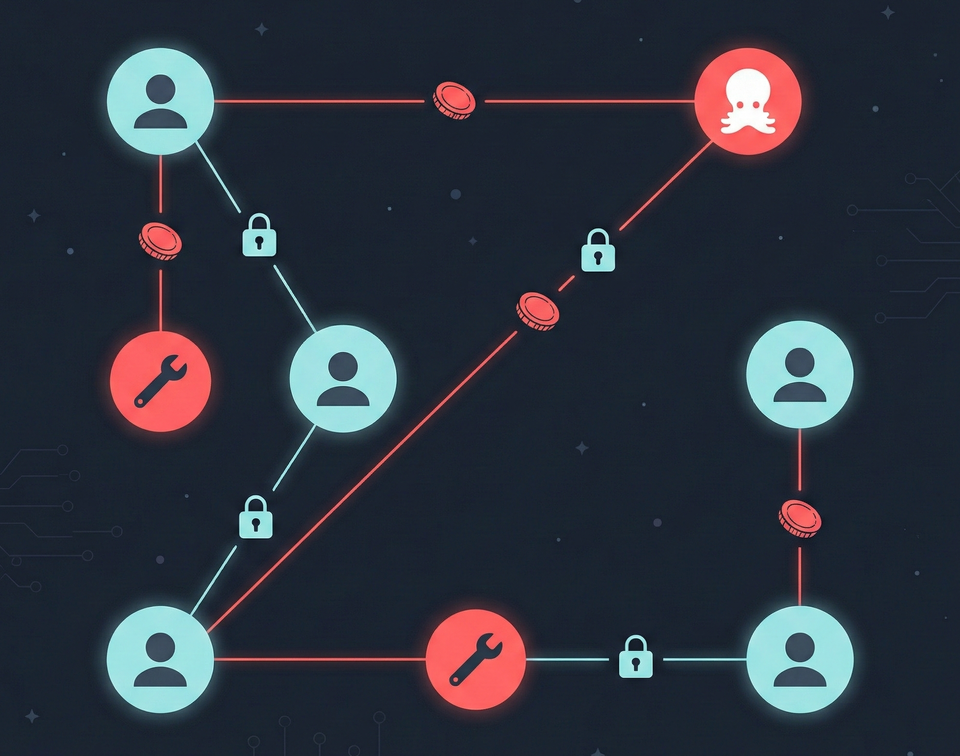
AI agents are getting good at doing work: calling tools, pulling data, running workflows, and interacting with systems outside the chat window.
But there’s a missing primitive that becomes obvious the moment agents start operating like software:
How does an agent pay programmatically, per-request, and without subscriptions or human checkout flows?
That’s what x402 is trying to solve.
x402 is an internet-native payments standard built on HTTP using the long-reserved HTTP 402 Payment Required status code as the “payment handshake” between a client and a server.
If AI agents are the new execution layer, x402 aims to be the payment layer.
Why agents need payments (not just auth)
Most “agent tooling” today assumes one of these models:
- Free APIs (great until rate limits hit)
- Subscriptions (hard to automate per-task economics)
- API keys + billing accounts (works for devs, breaks for agents operating across many services)
- Ads / data monetization (misaligned with privacy and user control)
Agents change the game because they’re high-frequency, tool-heavy, and autonomous. A single workflow might call:
- a search tool
- a scraper
- a database query
- a chart generator
- a video or image model
- a premium dataset
If every tool requires a separate account, key, subscription, or human approval step, the “agent economy” stalls.
Agents need metered, composable payments the same way the web needed composable requests.
What x402 actually is:
At a high level, x402 introduces a simple flow:
- Agent (client) calls an API (a tool endpoint).
- If payment is required, the server responds with HTTP 402 and includes payment requirements.
- The client pays (typically via a crypto rail / stablecoin mechanism) and retries or continues the request.
- The server verifies payment and returns the resource.
That’s the key idea:
Payment becomes an HTTP-native step like auth, caching, or redirects.
The official x402 project describes it as a payments protocol “built on HTTP.”
Why x402 matters for LLM agents
An LLM agent is basically a planner + executor:
- LLM decides what to do next
- Tools execute the steps
- Memory stores context
- Payments should unlock resources on demand
Without payments, an agent can plan… but it can’t reliably execute across paid services.
With x402, you can imagine an agent that:
- buys one premium data pull instead of subscribing
- pays per inference for a specialized model
- pays per document processed
- pays per “job” (scrape, summarize, generate)
- pays per API call across many providers—without new accounts each time
That’s not just convenience. It enables a real marketplace of tools where:
- providers can price precisely
- users only pay for what they use
- agents can dynamically choose the best tool for the cost
The deeper shift: from “apps” to “economic workflows”
The most important change isn’t “agents can pay.”
It’s this:
Agents turn software into a chain of micro-services.
And micro-services demand micro-transactions.
In the same way HTTP standardized how clients request resources, x402 pushes toward a world where:
- APIs can be monetized instantly
- pricing can be per-call or per-output
- services become composable blocks
- agent workflows become economically self-contained
This is what an “agent payment protocol” starts to look like.
Where Shinkai fits
Shinkai’s core thesis has always been that agents should be user-owned with control over:
- where data flows
- which models run locally vs remotely
- what tools are invoked
- and how permissions are granted
That’s why we think standards like x402 are important:
they push payments down into the protocol layer so agents can transact without central gatekeepers.
And when you combine that with local-first execution, you get a powerful privacy + economics pairing:
- sensitive context stays local
- the agent only sends what it must to a paid endpoint
- payment is explicit and programmable
- monetization doesn’t require surveillance
If you’ve been searching for things like “lm studio alternative” because you want more control over your AI stack, the next step is often the same:
not just running models but running agents with real tool access and real payments.
That’s the direction we’re building toward with Shinkai Desktop and Shinkai’s broader agent ecosystem.
What x402 enables for builders and tool creators
For developers shipping agent tools, x402 opens up a cleaner business model:
1) Pay-per-call APIs
Charge per request instead of forcing subscriptions.
2) Pay-per-output pricing
Price by tokens processed, images generated, documents parsed, or compute seconds consumed.
3) Permissionless distribution
Instead of “create account → add card → get key”, your API can become instantly usable by any compatible client.
4) Agent-native monetization
Your tool becomes a paid step inside agent workflows—like a paid function call.
Challenges
x402 is promising, but a few things will decide whether it becomes real infrastructure:
- UX: payment flows must be invisible but consentful
- Latency: fast settlement or smart credit/allowance systems matter
- Security: wallet/key management must be safe for autonomous clients
- Standards: interoperability across clients, providers, and chains
If these pieces land, x402 could become a default primitive in the agent stack—alongside runtimes, orchestration, and tool protocols.
The takeaway
Agents are moving from “chat that answers” to “software that acts.
When software acts, it touches paid resources:
- compute
- data
- inference
- premium tools
- specialized APIs
x402 is one of the first serious attempts to make payments as programmable as HTTP requests.
And if the agent economy is real, the payment layer won’t be optional, it will be foundational.
🐙 Your AI. Your Rules.