

The Utility Layer: How AI Agents Are Evolving the Web3 User Experience
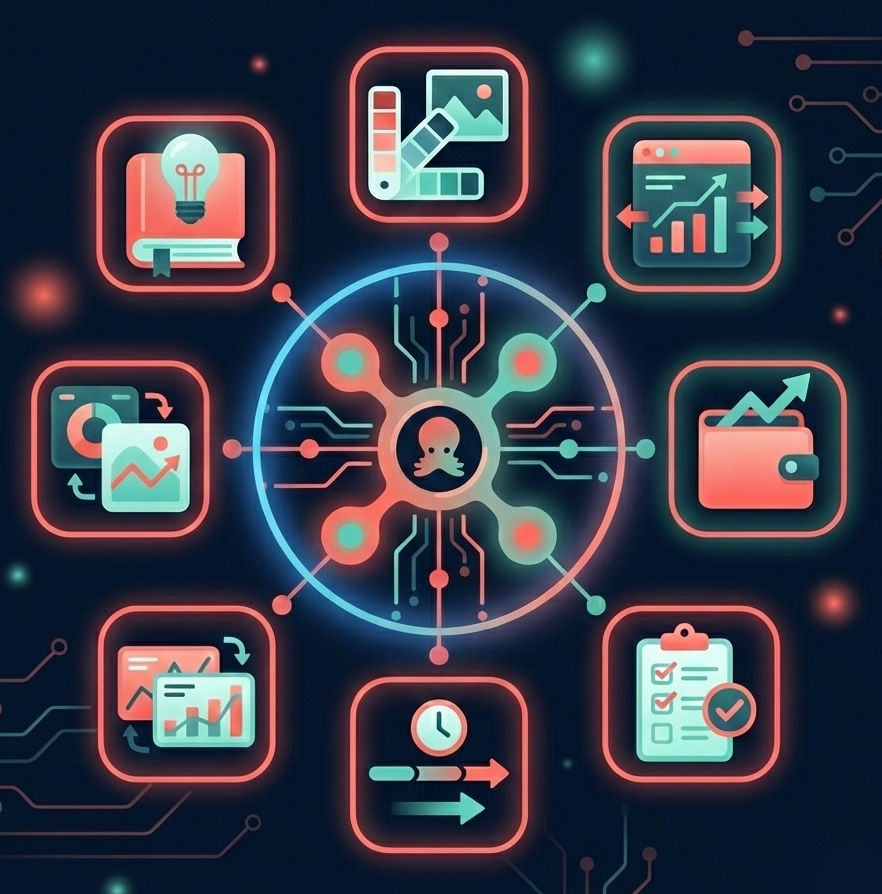
Most conversations about AI in Web3 still orbit the same themes: trading bots, wallet automation, or “agents that buy things.”
Those are real use cases, but they’re not the whole story.
A bigger shift is happening underneath the hype: AI agents are becoming the utility layer for Web3. Not just executors, but digital teammates that help communities and protocols operate, educate, analyze, and coordinate.. faster and with less friction.
Instead of forcing users to navigate fragmented dashboards, docs, Discord threads, and governance forums, agents let you interact with a protocol like you would with a knowledgeable operator: ask questions, run analysis, generate outputs, and move from information → action.
Platforms like Shinkai are enabling this shift by making it easier to build and run agents that can connect to tools, data sources, and workflows. Giving both users and protocol teams a more intuitive interface to the ecosystem.
Here are the clearest ways AI agents are becoming essential infrastructure for Web3 and DeFi.
1) Context-aware education that doesn’t get outdated
DeFi is complex by design: utilization rates, liquidation thresholds, bonding curves, incentive emissions, and most users hit the same wall:
Docs are static. Questions are specific. The protocol evolves weekly.
AI agents turn education into a dynamic experience.
- For project owners: fewer repetitive support tickets and fewer “where is this documented?” loops
- For Discord moderators: a force multiplier for repetitive questions, freeing mods to focus on culture and safety
- For end users: an on-demand tutor that can explain your exact situation (“how rewards are calculated in this pool right now”) and adapt the explanation to your level of knowledge
The outcome: better onboarding, fewer misunderstandings, and less community fatigue.
2) Decentralized marketing assets that still stay on-brand
DAOs move fast, but branding can drift even faster.
When everyone is creating content, consistency is hard: tone, visuals, messaging, and even basic terminology can fragment across the community.
With agent workflows, communities can generate marketing outputs while keeping them aligned to the protocol’s identity. For example, agents can be equipped with a brand kit (logos, colors, fonts, tone) and produce:
- social visuals and campaign concepts
- technical infographics and explainers
- short-form scripts and community announcements
- “on-brand fun” content that still looks professional
This makes growth more scalable — without turning the DAO into a design bureaucracy.
3) The “pulse” of the protocol: dashboards that match Your questions
Most users rely on official dashboards or third-party analytics sites.
But those UIs are limited to what someone decided to ship:
- the metrics might be too generic
- the data might lag
- the UI might change
- the site might go down at the wrong moment
Agents unlock a different model: you can build your own protocol pulse.
Instead of “what metrics are available,” you can ask:
- “Show me the correlation between X and Y over the last 30 days.”
- “Track this niche utilization metric and alert me when it crosses a threshold.”
- “Graph this pool’s behavior before and after a governance change.”
And if you’re using no-code agent platforms (like Shinkai), the barrier to building these dashboards drops dramatically. It becomes less “wait for the dev team” and more “build the view you need.”
4) Personalized position monitoring across multiple protocols
DeFi power users don’t live inside a single dApp.
They jump between protocols, positions, LPs, loans, staking, and bridges — and often need to check everything across multiple frontends just to answer:
“Am I safe? Am I exposed? What changed?”
AI agents can consolidate that experience into a single workflow:
- fetch live on-chain position data
- summarize exposure and risk
- track changes over time
- surface what matters most for your portfolio
And when you pair agent outputs with multimodal models, you can also ask AI to interpret the charts and dashboards your agent generates — making “monitoring” feel like a conversation rather than a spreadsheet.
5) Governance aid: from auditing to drafting
Governance is one of the most powerful parts of Web3, and also one of the most exhausting.
Agents can support both sides of the process:
For voters and community members
- summarize proposals and forum threads
- flag inconsistencies or missing assumptions
- highlight trade-offs and second-order effects
- provide structured arguments for and against
For teams and proposers
- draft proposals more clearly
- validate logic and expected outcomes
- back claims with relevant data
- prepare better review plans and communication
The result isn’t “AI replaces governance.”
It’s that governance becomes more readable, faster to evaluate, and less dominated by whoever has the most time.
6) Tracking historical parameter changes (the missing context)
Understanding a protocol requires knowing not just how it works today — but how it evolved.
Parameters change constantly:
- collateral factors
- interest rate models
- fee structures
- emissions schedules
- risk limits
Agents can help build that historical memory by tracking, logging, and explaining changes over time, which helps:
- users understand where the protocol is heading
- analysts evaluate consistency and governance direction
- teams recap decisions and communicate strategy more objectively
This kind of institutional memory is rare in Web3, and extremely valuable.
7) Cross-analysis: connecting the dots across governance, parameters, and markets
The most advanced utility comes when agents combine everything above.
Instead of viewing data in isolation, users can ask agents to correlate:
- a governance decision
- the parameter changes that followed
- resulting shifts in utilization / liquidity
- and the market response (price action, flows, volatility)
This is what “agentic intelligence” does best: overlaying multiple datasets inside one workflow to uncover relationships that otherwise require 10 tabs, 3 dashboards, and a lot of manual work.
Agents aren’t just automation,they’re better participation
AI agents in Web3 aren’t only about doing things faster.
They’re about making participation more usable, more informed, and more personalized for users, communities, and teams alike.
As this utility layer matures, we’ll see the best protocols win not only on tech… but on UX:
- education that adapts
- dashboards that answer real questions
- governance that scales
- workflows that feel human
And by building these agents through platforms like Shinkai, users can move toward more controlled, privacy-aware workflows, while protocol leaders gain new ways to support and coordinate their communities.
The decentralized web needs better interfaces.
Agents are becoming that interface.